Most marketers treat AEO and GEO like interchangeable strategies. They're not. Understanding the difference between answer engine optimization and generative engine optimization is the difference between appearing in featured snippets and getting cited inside AI Overviews—and in 2026, you need both for modern SEO success.
AEO (answer engine optimization) helps your content show up as a direct answer in featured snippets, People Also Ask boxes, and voice search responses. GEO (generative engine optimization) helps your content get cited and summarized inside AI experiences like Google's AI Overviews, ChatGPT, and other AI models. While traditional SEO focuses on search engine rankings, AEO and GEO optimize for how AI systems and search engines actually use your content.
Both matter, but they serve different goals. If you're optimizing for AI-driven search in 2026, you need to know exactly when to use each strategy. This guide breaks down AEO vs GEO SEO strategies, when to use each approach, and how to structure content that both search engines and AI models can use effectively.
In this post, we break down the core differences between AEO and GEO, which content types perform best for each, how to structure pages so search engines and AI models can actually use them, and common mistakes that hold businesses back.
What Is Answer Engine Optimization (AEO)?
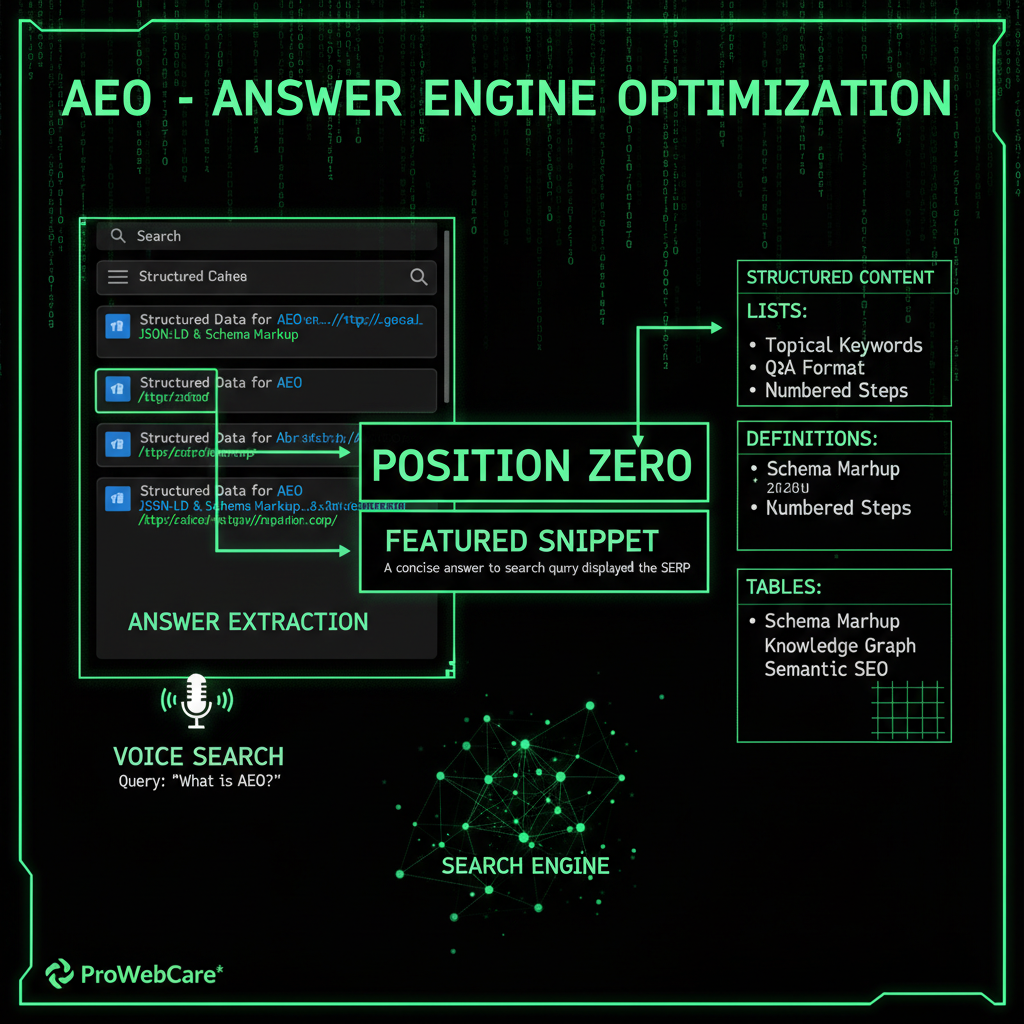
Answer Engine Optimization (AEO) is the practice of optimizing content to appear as direct answers in search results. This includes featured snippets (Position Zero), People Also Ask boxes, voice search results, and direct answer boxes that search engines display at the top of search results.
AEO focuses on providing clear, concise answers that search engines can extract and display immediately. When someone asks "how long does SEO take?" or "what is WordPress?", AEO-optimized content appears in the featured snippet—that box at the top of search results that gives the answer without requiring a click. Unlike traditional SEO which focuses on ranking, AEO optimizes for answer extraction and featured snippet visibility.
The goal of answer engine optimization is to capture Position Zero—the featured snippet that appears above organic search results. This position gets the highest click-through rates and dominates voice search results, since voice assistants and AI-powered search tools read featured snippets aloud. AEO is essentially SEO optimization specifically for answer engines and featured snippets.
Key Characteristics of AEO
- Direct answers: Content provides clear, factual answers to specific questions
- Structured format: Uses lists, tables, definitions, and step-by-step guides
- Question-focused: Targets specific "what is," "how to," "why," and "when" queries
- Featured snippet optimization: Designed to be extracted and displayed in Position Zero
- Voice search friendly: Answers work well when read aloud by voice assistants
What Is Generative Engine Optimization (GEO)?
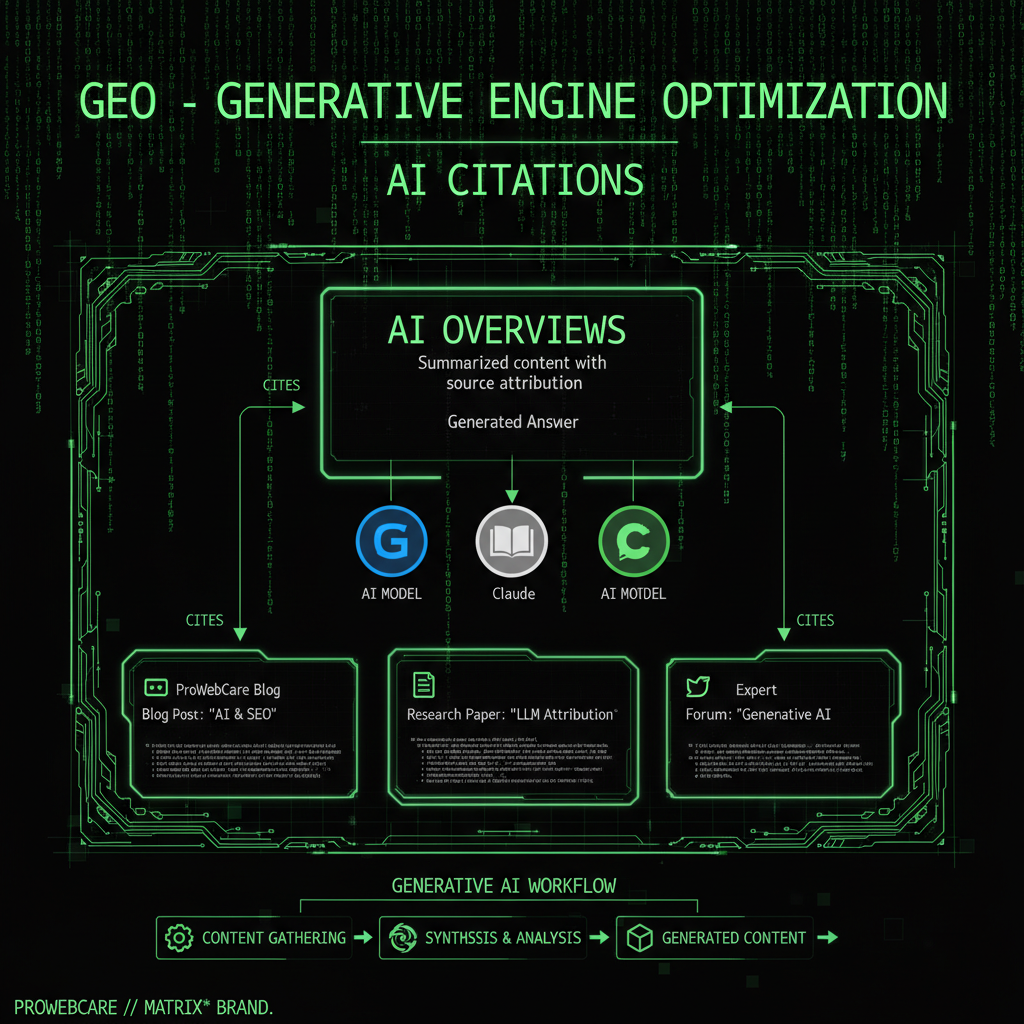
Generative Engine Optimization (GEO) is the practice of optimizing content to be cited and summarized by AI models like Google's AI Overviews, ChatGPT, Claude, Gemini, Perplexity, and other generative AI systems. Unlike AEO, which targets featured snippets, GEO targets AI-generated responses that synthesize information from multiple sources. GEO optimizes for how AI models like ChatGPT and other LLMs (large language models) consume and reference your content.
When Google's AI Overviews answer a query, they cite sources. When ChatGPT, Claude, or other AI models provide information, they reference content from the web. GEO ensures your content is one of those sources—and that it's cited favorably by AI systems. This is different from traditional SEO, which focuses on search engine rankings, and AEO, which focuses on featured snippets.
GEO focuses on creating content that AI models can understand, summarize, and cite. This requires different optimization techniques than traditional SEO or AEO, since you're optimizing for AI model understanding rather than just search engine ranking. GEO is about making your content AI-friendly so that generative engines cite it when generating responses.
Key Characteristics of GEO
- Comprehensive coverage: Provides thorough, authoritative information on topics
- Source credibility: Establishes expertise and authority that AI models recognize
- Clear structure: Uses headings, definitions, and logical flow that AI can parse
- Citation-friendly: Provides quotable statements and clear attribution
- Multi-source synthesis: Content works well when AI combines it with other sources
Core Differences: AEO vs GEO
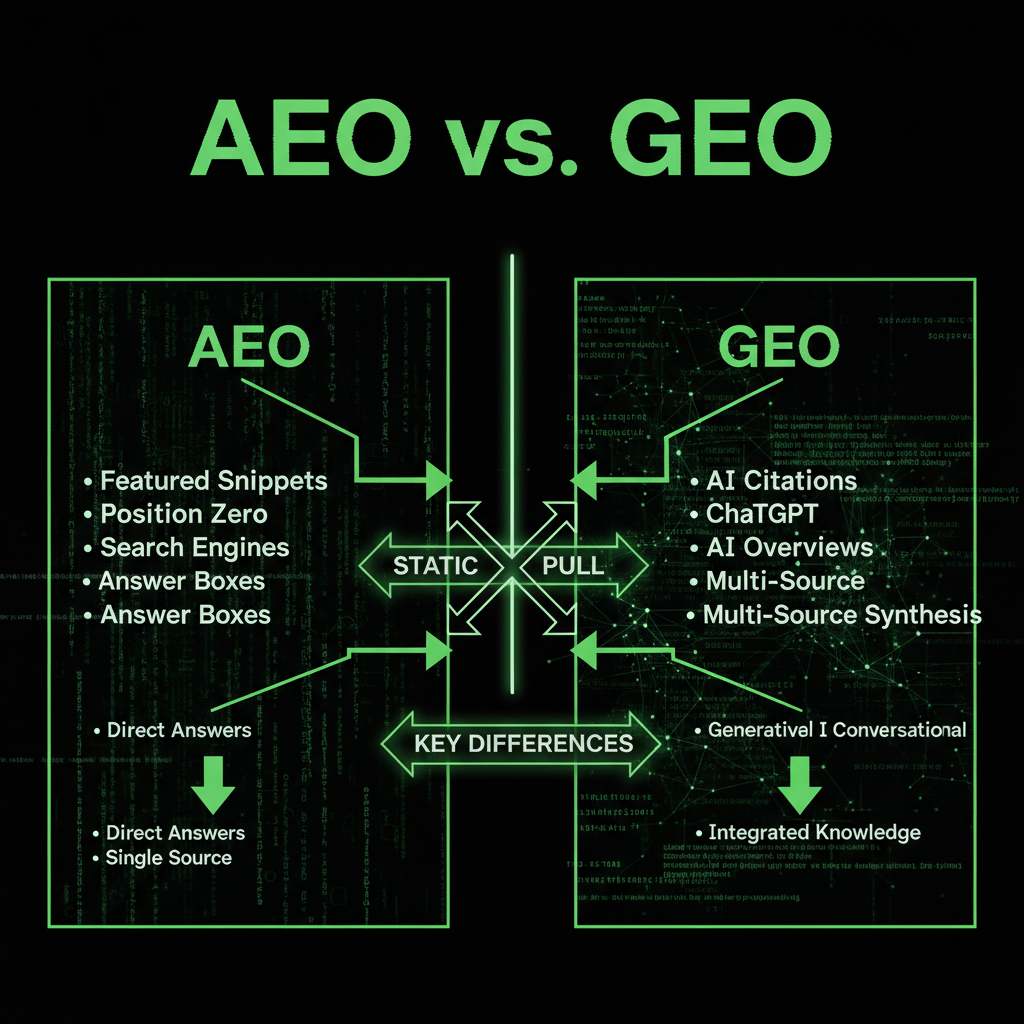
Understanding the differences between AEO and GEO is critical for choosing the right optimization strategy. Here's how they differ:
Target Output
AEO targets: Featured snippets, Position Zero, direct answer boxes, voice search results
GEO targets: AI Overviews citations, ChatGPT responses, AI-generated summaries, multi-source synthesis
Content Format
AEO content: Short, direct answers (40-60 words for featured snippets), structured lists, definitions, step-by-step guides
GEO content: Comprehensive, in-depth content (1,500+ words), authoritative explanations, multiple perspectives, well-researched articles
Optimization Focus
AEO focuses on: Answer extraction, snippet formatting, question matching, voice search compatibility
GEO focuses on: Source authority, content comprehensiveness, citation quality, AI model understanding
User Interaction
AEO: Users get the answer immediately in search results—often without clicking
GEO: Users see your content cited in AI responses, which can drive clicks to your site
When to Use AEO
Use answer engine optimization when you want to capture Position Zero and provide immediate answers. AEO works best for optimizing content that search engines extract for featured snippets. Unlike traditional SEO which focuses on rankings, AEO specifically targets answer engines and featured snippet visibility. AEO optimization helps your content appear directly in search results, making it ideal for quick answers that users can see without clicking.
1. "What Is" and Definition Queries
Definition queries are perfect for AEO. When someone searches "what is answer engine optimization?" or "what is SEO?", AEO-optimized content appears in the featured snippet with a clear definition. Search engines extract these definitions directly from your content to display in answer boxes.
How to optimize: Start your content with a clear, concise definition (40-60 words). Use the exact question as an H2 heading. Provide the definition in the first paragraph, then expand with more details. This format works well for search engines extracting answers for featured snippets.
2. How-To Guides and Step-by-Step Instructions
Step-by-step guides work exceptionally well for AEO. Search engines love extracting numbered lists and displaying them in featured snippets.
How to optimize: Use numbered lists (1, 2, 3) for steps. Keep each step concise (1-2 sentences). Use clear action verbs. Start with "Step 1:" format. Our SEO audit service follows this structure to help businesses understand the process clearly.
3. Comparison Queries
Comparison queries ("AEO vs GEO," "WordPress vs Joomla") are ideal for AEO. Search engines often display comparison tables or lists in featured snippets.
How to optimize: Create comparison tables. Use clear headings for each option. List differences in bullet points. Provide a clear recommendation or summary at the end.
4. Voice Search Queries
Voice search queries are naturally question-based and work well with AEO. Voice assistants read featured snippets aloud, making AEO essential for voice search optimization.
How to optimize: Use natural language questions. Provide conversational answers. Keep answers concise (under 60 words). Use "I" and "you" for conversational tone.
When to Use GEO
Use generative engine optimization when you want your content cited in AI-generated responses and AI Overviews. GEO works best for optimizing content that AI models like ChatGPT, Claude, Gemini, and Perplexity can cite and reference. Unlike traditional SEO or AEO, GEO optimizes specifically for how generative engines and AI systems consume your content. GEO optimization helps your content get cited by AI models when they generate responses, making it essential for visibility in AI-driven search.
1. Comprehensive Topic Coverage
AI models like ChatGPT, Claude, Gemini, and Perplexity prefer comprehensive, authoritative content when generating responses. GEO-optimized content provides thorough coverage that AI systems can cite and summarize. When AI models generate answers, they look for authoritative sources with comprehensive coverage—this is where GEO optimization helps your content get cited by these generative engines.
How to optimize: Create long-form content (1,500-3,000 words). Cover topics comprehensively. Include multiple perspectives. Provide original research or insights. Establish clear authority and expertise. AI models favor content that demonstrates deep understanding, so comprehensive GEO-optimized content performs better in AI citations than short-form content.
2. Expert Authority and Credibility
AI models like ChatGPT, Claude, and other generative engines cite authoritative sources. GEO focuses on building credibility that AI systems recognize and trust. When AI models like those powering Google's AI Overviews generate responses, they prefer citing sources that demonstrate expertise and authority.
How to optimize: Establish expertise through credentials, experience, and original research. Use author bylines with credentials. Include data, statistics, and original insights. Cite authoritative sources. Provide unique perspectives. AI models are trained to recognize and cite authoritative sources, so GEO optimization focuses on building that authority that AI systems value.
3. Complex Topics Requiring Synthesis
Complex topics benefit from GEO because AI models like ChatGPT, Claude, and Perplexity synthesize information from multiple sources. Your content becomes part of that synthesis when AI systems generate comprehensive answers. Generative engines pull from multiple sources to create responses, so GEO-optimized content increases your chances of being one of those cited sources.
How to optimize: Provide detailed explanations. Include multiple viewpoints. Reference related topics. Use clear structure that AI models can parse. Make connections between concepts clear. AI systems favor content that helps them understand complex topics comprehensively, making GEO optimization essential for complex subject matter.
4. Evergreen Content with Long-Term Value
Evergreen content performs well with GEO because AI models reference it over time. Comprehensive, authoritative content remains relevant and citable.
How to optimize: Create timeless content. Update regularly to maintain relevance. Maintain authority and accuracy. Our maintenance plans ensure your content stays current and authoritative.
How to Structure Pages for AEO
Structuring pages for answer engine optimization requires specific formatting and content organization that helps search engines extract answers. AEO optimization focuses on making content easy for search engines to parse and display in featured snippets. Here's how to structure AEO-optimized content for maximum visibility in answer engines:
1. Start with a Clear Answer
The first paragraph should answer the question directly. Use 40-60 words for the answer. Place the exact question as an H2 heading. Make the answer easy to extract.
Example structure:
<h2>What Is Answer Engine Optimization?</h2>
<p>[Clear 40-60 word definition here]</p>
2. Use Structured Formats
Use lists, tables, and structured formats that search engines can extract easily:
- Numbered lists: For step-by-step guides (1, 2, 3)
- Bullet points: For features, benefits, or lists
- Tables: For comparisons or data
- Definitions: For "what is" queries
3. Target Specific Question Formats
Structure content to match question formats:
- "What is X?": Definition + explanation
- "How to X?": Step-by-step guide
- "X vs Y": Comparison table or list
- "Why X?": Reasons list + explanation
4. Optimize for Voice Search
Voice search optimization requires natural language and conversational answers:
- Use natural question formats
- Keep answers under 60 words
- Use conversational language
- Include "I" and "you" for natural speech
How to Structure Pages for GEO
Structuring pages for generative engine optimization requires comprehensive, authoritative content that AI models can understand and cite. GEO optimization focuses on making content AI-friendly so that generative engines like ChatGPT, Claude, Gemini, and other AI systems can effectively parse and reference your content. Unlike AEO which targets search engines, GEO optimizes for how AI models consume information. Here's how to structure GEO-optimized content for maximum citations from AI systems:
1. Provide Comprehensive Coverage
Create thorough, in-depth content (1,500-3,000 words) that covers topics comprehensively. AI models like ChatGPT, Claude, Gemini, and other generative engines prefer comprehensive sources when generating responses. GEO optimization requires content depth that AI systems can draw from when synthesizing information.
Structure: Introduction → Main sections → Examples → Conclusion. Each section should provide substantial value and depth. AI models parse structured content more effectively, so clear GEO-optimized structure helps AI systems understand and cite your content.
2. Establish Clear Authority
Establish expertise and authority that AI models recognize:
- Include author credentials and expertise
- Provide original research or data
- Cite authoritative sources
- Demonstrate deep understanding of the topic
- Show expertise that AI systems like ChatGPT and Claude recognize
AI models are trained to identify and cite authoritative sources. GEO optimization focuses on building the credibility and expertise that generative engines recognize when selecting sources for AI-generated responses.
3. Use Clear Hierarchical Structure
Use clear heading hierarchy (H2, H3) that AI models can parse:
- H1: Main topic
- H2: Major sections
- H3: Subsections
- Clear, descriptive headings
This structure helps AI models understand content organization and extract relevant information. Our website development service follows similar clear structures to ensure both users and AI systems can navigate content effectively.
4. Provide Quotable Content
Create content with quotable statements and clear insights that AI models can cite:
- Use clear, definitive statements
- Provide statistics and data points
- Include expert quotes or insights
- Make key points stand out
- Format content so AI systems can easily extract quotable statements
AI models like those in ChatGPT, Claude, and Google's AI Overviews extract and cite specific statements from sources. GEO optimization ensures your content has quotable, authoritative statements that AI systems will reference when generating responses.
5. Include Multiple Perspectives
Cover topics from multiple angles to provide comprehensive coverage that AI models value:
- Address different use cases
- Include pros and cons
- Cover related topics
- Provide context and nuance
Common Mistakes That Hold Businesses Back
Many businesses make mistakes when implementing AEO and GEO strategies for AI-driven search optimization. Digital marketers often confuse these optimization approaches or fail to optimize properly for both search engines and AI models. Here are the most common mistakes that hold businesses back from achieving visibility in both traditional SEO and AI-driven search, and how to avoid them:
1. Treating AEO and GEO as the Same Thing
Mistake: Using the same optimization strategy for both AEO and GEO
Reality: AEO and GEO require different approaches. AEO needs concise, structured answers. GEO needs comprehensive, authoritative content.
Solution: Understand the differences and optimize accordingly. Use AEO for quick answers and featured snippets. Use GEO for comprehensive content and AI citations.
2. Optimizing Only for Featured Snippets
Mistake: Focusing exclusively on AEO and ignoring GEO
Reality: AI Overviews, ChatGPT, Claude, and other AI models are increasingly important. Ignoring GEO means missing citations in AI-generated responses. As more users interact with AI systems like ChatGPT and Google's AI Overviews, GEO optimization becomes essential for visibility in AI-driven search.
Solution: Balance both strategies. Use AEO for quick wins and featured snippets. Use GEO for long-term authority and AI citations. Modern SEO requires both AEO and GEO optimization to capture visibility in both traditional search results and AI-generated responses.
3. Keyword Stuffing Instead of Natural Language
Mistake: Over-optimizing with keywords instead of writing naturally
Reality: Both search engines and AI models prefer natural, readable content over keyword-stuffed text. AI systems like ChatGPT and search engines both penalize keyword stuffing, so natural language optimization works better for both AEO and GEO strategies.
Solution: Write for humans first. Use keywords naturally. Focus on providing value and clear answers. Optimize for both search engines and AI models by writing naturally. Our SEO audit service helps identify and fix keyword stuffing issues that hurt both traditional SEO and AI optimization.
4. Ignoring Content Structure
Mistake: Creating content without clear structure or hierarchy
Reality: Both search engines and AI models rely on structure to understand and extract content.
Solution: Use clear headings (H2, H3). Organize content logically. Use lists and tables where appropriate. Make structure support content goals.
5. Not Updating Content Regularly
Mistake: Creating content once and never updating it
Reality: Search engines and AI models favor fresh, current content. Outdated content loses authority and citations. AI systems like ChatGPT and Google's AI Overviews prioritize recent, accurate information, so stale content performs poorly in both traditional SEO and GEO optimization.
Solution: Update content regularly. Keep information current. Refresh statistics and data. Maintain authority through updates. Both search engines and AI models favor fresh content, so regular updates help maintain visibility in both traditional search and AI-generated responses. Our maintenance plans include content review and updates to keep your content current and authoritative for both SEO and AI optimization.
6. Focusing Only on Short-Form Content
Mistake: Creating only short, snippet-optimized content
Reality: GEO requires comprehensive, long-form content. Short content works for AEO but not for GEO citations.
Solution: Create a mix of content lengths. Use short-form for AEO. Use long-form (1,500+ words) for GEO. Match content length to optimization goals.
The Bottom Line
AEO and GEO are not interchangeable strategies. Answer engine optimization targets featured snippets and Position Zero. Generative engine optimization targets AI citations and AI Overviews.
Use AEO when you want immediate answers in featured snippets. Use GEO when you want comprehensive content cited by AI models. The best approach? Use both strategies together, optimizing different content for different goals.
In 2026, AI-driven search is here to stay. With AI Overviews, ChatGPT, Claude, and other AI systems becoming primary ways users find information, businesses that understand the difference between AEO and GEO—and implement both SEO strategies correctly—will outperform competitors who treat them as the same thing. Modern SEO requires optimizing for both search engines and AI models.
If you need help optimizing your content for AI-driven search, our SEO audit service identifies optimization opportunities for both AEO and GEO strategies. We analyze your content structure, identify featured snippet opportunities, and help you create comprehensive content that AI models like ChatGPT and Google's AI Overviews cite. Our SEO optimization services cover both traditional SEO and AI optimization strategies.
Frequently Asked Questions
What's the difference between AEO and traditional SEO?
Traditional SEO focuses on ranking in organic search results. AEO (answer engine optimization) focuses on appearing in featured snippets, Position Zero, and direct answer boxes. AEO requires specific formatting (lists, tables, concise answers) that search engines can extract and display immediately, while traditional SEO focuses on overall page ranking and authority.
Can I use both AEO and GEO for the same content?
Yes, but it's challenging. AEO works best with concise, structured answers (40-60 words), while GEO requires comprehensive, long-form content (1,500+ words). You can create comprehensive content (GEO) with structured sections optimized for featured snippets (AEO), but prioritize one strategy per piece of content for best results. Many businesses create separate content pieces: short-form for AEO, long-form for GEO.
How long does it take to see results from AEO optimization?
AEO optimization can show results in 2-4 weeks for featured snippets, though timeline varies based on competition and content quality. If your content already ranks in the top 10, featured snippet optimization can work faster. New content typically takes 3-6 months to capture featured snippets. The key is creating content that directly answers questions in a format search engines can extract.
How do I know if my content is being cited by AI models?
Check Google's AI Overviews for your target queries and see if your content appears as a source. Test queries in ChatGPT, Claude, or other AI tools and see if your content is referenced. Monitor referral traffic from AI-powered tools. Use tools that track AI citations (some SEO tools are adding this feature). However, tracking AI citations is still developing, so focus on creating comprehensive, authoritative content that AI models would naturally cite.
Which strategy should I prioritize: AEO or GEO?
Prioritize based on your goals and content type. Use AEO if you want immediate visibility in featured snippets and voice search results. Use GEO if you want long-term authority and citations in AI-generated responses. Most businesses benefit from both: use AEO for quick-answer content (definitions, how-tos) and GEO for comprehensive guides and authoritative content. The best approach is a balanced strategy that uses both optimization techniques.
Do I need to rewrite all my content for AEO and GEO?
No, you don't need to rewrite everything. Audit your existing content and identify optimization opportunities. Update high-performing content first. Create new content optimized for AEO or GEO based on your goals. Focus on content that already ranks well or has potential to rank. Not every piece of content needs AEO/GEO optimization—prioritize content that drives traffic and conversions. Our SEO audit service helps identify which content benefits most from AEO or GEO optimization.
How important is AEO and GEO in 2026?
Very important. Google's AI Overviews are now live, ChatGPT usage is growing, and voice search continues to increase. Businesses that optimize for AEO capture featured snippets and voice search results. Businesses that optimize for GEO get cited in AI-generated responses. Both strategies are essential for modern SEO success. Ignoring AEO and GEO means missing significant traffic opportunities in AI-driven search environments.
What does AEO stand for?
AEO stands for Answer Engine Optimization. It's a SEO strategy that focuses on optimizing content to appear in featured snippets, answer boxes, and voice search results. AEO differs from traditional SEO by specifically targeting how search engines extract and display direct answers, rather than just focusing on search engine rankings.
Is AEO the same as GEO?
No, AEO (Answer Engine Optimization) and GEO (Generative Engine Optimization) are different strategies with different goals. AEO focuses on appearing in featured snippets, answer boxes, and voice search results—optimizing for how search engines extract and display direct answers. GEO focuses on getting your content cited by AI models like ChatGPT, Claude, Gemini, and Google's AI Overviews. While both are important for modern SEO, AEO targets search engine answer extraction, while GEO targets AI model citations.
Is AEO just a new name for SEO?
No, AEO is not just a new name for SEO. Traditional SEO focuses on ranking in organic search results pages, while AEO (Answer Engine Optimization) specifically targets featured snippets, Position Zero, and direct answer boxes. AEO requires specific formatting and structure (lists, tables, concise answers) that search engines can extract and display immediately. While AEO is part of modern SEO strategy, it's a specialized approach that goes beyond traditional ranking optimization to target answer extraction and featured snippet visibility.
Is AIO the same as GEO?
No, AIO (AI Optimization) and GEO (Generative Engine Optimization) are related but different concepts. GEO specifically targets generative AI systems like ChatGPT, Claude, Gemini, and Google's AI Overviews, optimizing content to be cited by these AI models. AIO is a broader term that can include various AI optimization strategies. GEO is a subset of AIO that focuses specifically on generative engines and AI citation optimization.