Google December 2025 Core Update: What You Need to Know
December 10, 2025. Google announced the December 2025 core update, rolling out across search results over the next three weeks.
Recent Developments
- Google released the December 2025 core update on December 10, 2025, marking the third core update and fourth confirmed Google algorithm update in 2025[1].
- The rollout will take up to three weeks to complete, affecting search rankings globally across all languages and regions[1].
- This update follows the August 2025 spam update, June 2025 core update, and March 2025 core update, continuing Google's focus on surfacing relevant, satisfying content[1].
- Google emphasized that this is a regular update designed to better surface relevant, satisfying content for searchers from all types of sites[1].
This is the third core update of 2025.
Google's December 2025 core update is now rolling out, and it will take up to three weeks to fully complete. This marks the third core update of the year, following the June 2025 core update and the March 2025 core update. Combined with the August 2025 spam update, this represents the fourth major Google algorithm update in 2025.
According to Google's Search Status Dashboard, the December 2025 core update is "a regular update designed to better surface relevant, satisfying content for searchers from all types of sites."
What does this mean for your website?
Core updates introduce broad, significant changes to Google's search algorithms and systems. They can improve visibility for sites with helpful, people-first content, but may cause fluctuations or declines for sites that don't meet Google's quality standards. Our SEO audit service can help identify areas for improvement before updates impact your rankings.
Quick Summary: December 2025 Core Update
- Launch date: December 10, 2025
- Rollout duration: Up to 3 weeks
- Update type: Core update (broad algorithm changes)
- 2025 position: Third core update, fourth overall Google update
- Focus: Surfacing relevant, satisfying content for searchers
- Key message: Create helpful, people-first content, not content designed to rank
What is a Google Core Update?
Google core updates are broad changes to Google's search algorithms and systems. Unlike smaller, targeted updates that focus on specific issues (like spam or specific ranking factors), core updates make significant, wide-ranging improvements to how Google understands and ranks content.
Key Characteristics of Core Updates
- Broad impact: Core updates affect search results across all languages, regions, and industries
- Significant changes: These are major algorithm improvements, not minor tweaks
- Announced updates: Google publicly announces core updates (unlike smaller, unannounced updates)
- Rollout duration: Core updates typically take 1-3 weeks to fully roll out
- Ongoing refinement: Google continues to refine algorithms between core updates
Why Google Announces Core Updates
Google announces core updates because they can cause significant volatility in search results. When rankings change dramatically, site owners need to understand that:
- The changes are algorithmic, not manual penalties
- There's nothing "wrong" with sites that see ranking declines
- Recovery may require improving content quality, not fixing technical issues
- Changes can happen gradually as the update rolls out
The December 2025 Core Update: Key Details
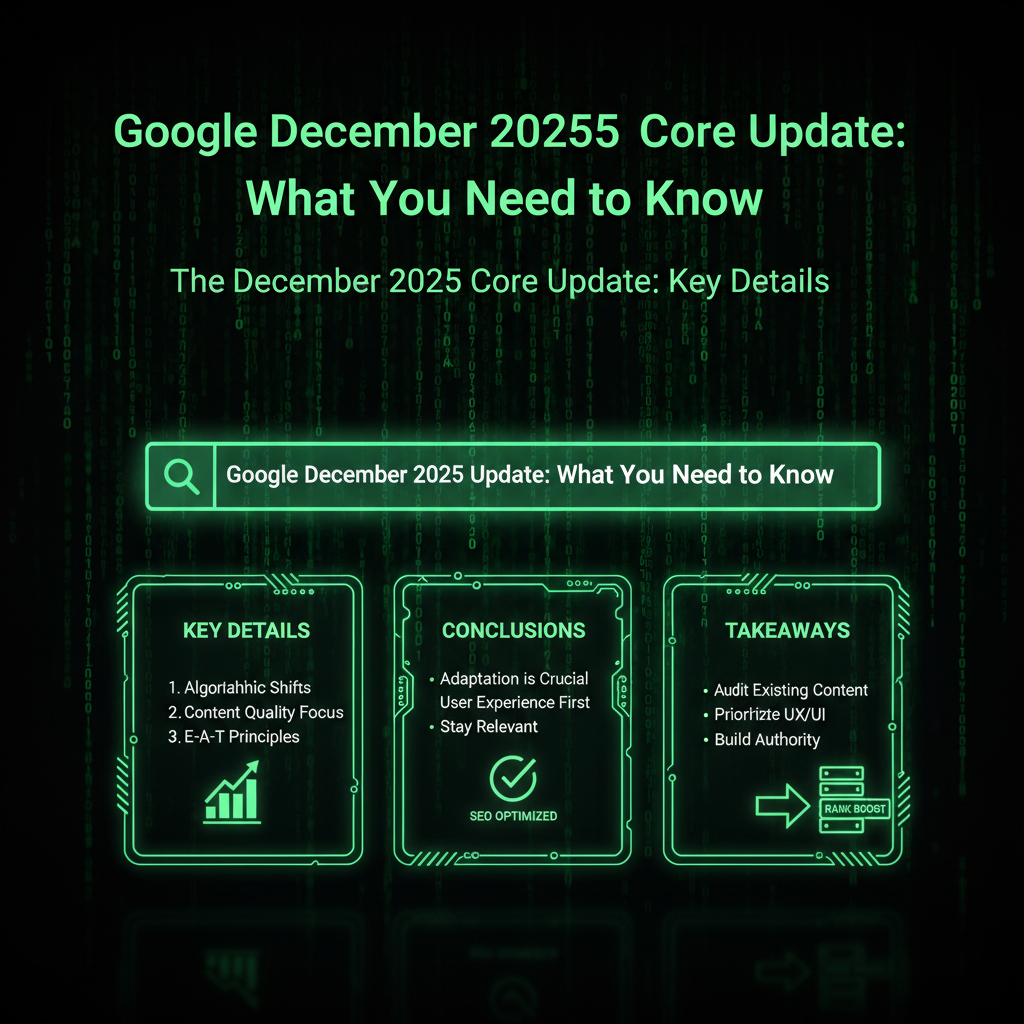
Google released the December 2025 core update on December 10, 2025. Here's what we know:
Rollout Timeline
- Start date: December 10, 2025
- Expected completion: Up to 3 weeks (approximately January 1, 2026)
- Rollout pattern: Gradual rollout across all regions and languages
- Volatility period: Rankings may fluctuate during the rollout period
Google's Official Statement
Google updated its Search Status Dashboard with the following message:
"Released the December 2025 core update. The rollout may take up to 3 weeks to complete."
On LinkedIn, Google added:
"This is a regular update designed to better surface relevant, satisfying content for searchers from all types of sites."
What This Update Focuses On
Based on Google's messaging and previous core updates, the December 2025 core update likely focuses on:
- Content quality: Better understanding of helpful, reliable content
- User satisfaction: Surfacing content that satisfies searcher intent
- E-E-A-T signals: Experience, Expertise, Authoritativeness, and Trustworthiness
- Relevance: Better matching queries with the most relevant content
- Content freshness: Understanding when fresh content matters
2025 Google Update Timeline
2025 has been an active year for Google algorithm updates. Here's the complete timeline:
| Date | Update Type | Duration | Focus |
|---|---|---|---|
| March 13, 2025 | Core Update | 2 weeks | Content quality |
| June 30, 2025 | Core Update | 2.5 weeks | Relevance & E-E-A-T |
| August 2025 | Spam Update | 1 week | Spam detection |
| December 10, 2025 | Core Update | 3 weeks | Relevant, satisfying content |
Update Frequency Analysis
2025 has seen more frequent core updates compared to previous years:
- 2025: 3 core updates (March, June, December) + 1 spam update
- 2024: 3 core updates (March, August, November/December)
- 2023: 2 core updates
- 2022: 2 core updates
This increased frequency suggests Google is continuously refining its understanding of quality content and user satisfaction.
What to Expect: Ranking Volatility and Changes
During the December 2025 core update rollout, you can expect:
1. Ranking Volatility
Search rankings will likely experience volatility during the 3-week rollout period. This is normal and expected. Rankings may:
- Fluctuate day-to-day as the update rolls out
- Show different patterns across different regions
- Stabilize gradually as the update completes
- Continue to adjust even after the rollout completes
2. Winners and Losers
Core updates typically create winners and losers:
- Winners: Sites with helpful, people-first content may see ranking improvements
- Losers: Sites with thin, unhelpful, or manipulative content may see declines
- Neutral: Sites that already meet quality standards may see minimal changes
3. Industry-Specific Impact
Different industries may experience different levels of impact:
- YMYL (Your Money or Your Life) topics: May see more significant changes due to E-E-A-T focus
- E-commerce: Product pages and category pages may be affected
- News and media: Freshness and authority signals may be more important
- Local businesses: Local SEO factors remain important
What to Do If You're Hit by the Update
If your site experiences ranking declines during the December 2025 core update, here's what Google recommends:
Google's Official Guidance
Google has provided specific guidance for sites affected by core updates:
- There aren't specific actions to take to recover: A negative rankings impact may not signal anything is wrong with your pages
- Focus on content quality: Write helpful content for people, not to rank in search engines
- Recovery may take time: You can see some recovery between core updates, but the biggest change would be after another core update
- Read Google's help page: Review the "creating helpful, reliable, people-first content" guidance
Questions to Consider
Google suggests asking yourself these questions if your site is hit:
- Content and quality questions:
- Does your content provide original information, reporting, research, or analysis?
- Does your content provide a substantial, complete, or comprehensive description of the topic?
- Does your content provide insightful analysis or interesting information beyond the obvious?
- If your content draws on other sources, does it avoid simply copying or rewriting those sources and instead provide substantial additional value?
- Expertise and authoritativeness:
- Is this content written by an expert or enthusiast who demonstrably knows the topic well?
- Is the content trustworthy?
- Would you feel comfortable trusting this content for issues relating to money or your life?
- Presentation and production:
- Is the content free from spelling or stylistic issues?
- Was the content produced well, or does it appear sloppy or hastily produced?
- Is the content mass-produced by or outsourced to many creators, or spread across a large network of sites?
Action Plan for Affected Sites
If your site is negatively impacted:
- Don't panic: Core updates cause volatility, and rankings may recover
- Audit your content: Review your top pages and identify areas for improvement
- Focus on E-E-A-T: Improve Experience, Expertise, Authoritativeness, and Trustworthiness signals
- Improve content depth: Add more comprehensive, helpful information
- Remove thin content: Delete or significantly improve low-quality pages
- Wait for the next update: Recovery often comes with the next core update
Creating Helpful, People-First Content
Google's core message for the December 2025 update is clear: create helpful, reliable, people-first content.
What is People-First Content?
People-first content is created primarily for people, not search engines. It:
- Serves a clear purpose: Answers questions, solves problems, or provides value
- Demonstrates expertise: Written by knowledgeable authors with real experience
- Is comprehensive: Covers topics thoroughly and completely
- Is trustworthy: Provides accurate, reliable information
- Is well-produced: Free from errors, well-organized, and easy to read
What is Search Engine-First Content?
Search engine-first content is created primarily to rank in search engines. It often:
- Uses excessive keyword stuffing
- Lacks original insights or value
- Is mass-produced or outsourced
- Focuses on search engines rather than users
- Provides thin, unhelpful information
E-E-A-T: Experience, Expertise, Authoritativeness, Trustworthiness
E-E-A-T is crucial for ranking well in core updates:
- Experience: First-hand experience with the topic you're writing about
- Expertise: Demonstrable knowledge and skill in the subject matter
- Authoritativeness: Recognition as an authority in your field
- Trustworthiness: Reliable, accurate information from trustworthy sources
Previous Core Updates: Patterns and Lessons
Looking at previous core updates can help us understand what to expect:
2024 Core Updates
| Update | Start Date | End Date | Duration |
|---|---|---|---|
| December 2024 | Dec. 12 | Dec. 18 | 6 days |
| November 2024 | Nov. 11 | Dec. 5 | 24 days |
| August 2024 | Aug. 15 | Sept. 3 | 19 days |
| March 2024 | March 5 | April 19 | 45 days |
Common Patterns
Analysis of previous core updates reveals common patterns:
- Rollout duration: Typically 1-3 weeks, sometimes longer for major updates
- Volatility: Rankings fluctuate during rollout, then stabilize
- Recovery: Sites that improve content quality often recover in subsequent updates
- Focus areas: Content quality, E-E-A-T, user satisfaction, relevance
Best Practices: How to Prepare for Core Updates
While you can't prevent core updates from affecting your site, you can prepare:
1. Focus on Content Quality
- Create comprehensive, helpful content that serves users
- Demonstrate expertise and experience in your topics
- Provide original insights, not just rehashed information
- Update and refresh existing content regularly
2. Build E-E-A-T Signals
- Showcase author credentials and expertise
- Cite authoritative sources and link to reputable sites
- Provide clear contact information and about pages
- Demonstrate first-hand experience with topics
3. Improve User Experience
- Ensure fast page load times (Core Web Vitals)
- Make content mobile-friendly and accessible
- Organize content clearly with proper headings
- Use clear, readable formatting
4. Monitor and Analyze
- Track rankings and traffic during updates
- Monitor search console for issues
- Analyze which pages are affected
- Identify patterns in winners and losers
Monitoring Your Site During the Update
During the 3-week rollout period, monitor your site closely:
Key Metrics to Watch
- Organic traffic: Overall traffic trends and patterns
- Keyword rankings: Position changes for important keywords
- Impressions and clicks: Search Console data
- Page-level performance: Which pages are affected
- Conversion rates: Impact on business metrics
Tools for Monitoring
- Google Search Console: Official data on search performance
- Google Analytics: Traffic and user behavior data
- Rank tracking tools: Monitor keyword positions
- Volatility trackers: Industry-wide ranking volatility
What to Look For
- Sudden drops: Significant ranking declines may indicate impact
- Gradual changes: Slow, steady changes as update rolls out
- Page-specific patterns: Certain types of pages may be affected more
- Recovery signs: Rankings stabilizing or improving
Frequently Asked Questions
How long will the December 2025 core update take to roll out?
The December 2025 core update will take up to 3 weeks to fully roll out, starting from December 10, 2025. This means the update should complete around January 1, 2026, though some fluctuations may continue after the official rollout period ends.
What should I do if my rankings drop during the update?
If your rankings drop, don't panic. Focus on improving your content quality, building E-E-A-T signals, and creating helpful, people-first content. Recovery often comes with the next core update. Review Google's "creating helpful, reliable, people-first content" guidance and audit your content for areas of improvement.
Will the December 2025 core update affect all industries equally?
No, different industries may experience different levels of impact. YMYL (Your Money or Your Life) topics may see more significant changes due to E-E-A-T focus. E-commerce, news, and local businesses may also experience varying impacts depending on content quality and relevance.
Can I recover from a core update penalty?
Core updates aren't penalties—they're algorithm improvements. If your site is affected, focus on improving content quality and E-E-A-T signals. Recovery may happen gradually, and significant improvements often come with the next core update. There's no "quick fix" for core update impacts.
How many core updates has Google released in 2025?
Google has released 3 core updates in 2025: March 2025, June 2025, and December 2025. Additionally, Google released an August 2025 spam update, making 4 total confirmed Google algorithm updates in 2025.
What's the difference between a core update and a spam update?
Core updates are broad algorithm improvements that affect how Google understands and ranks content. Spam updates specifically target spam, manipulative content, and policy violations. Core updates are more significant and affect a wider range of sites, while spam updates are more targeted.
Should I make changes to my site during the update rollout?
It's generally best to wait until the update fully rolls out before making major changes. However, if you identify clear content quality issues, you can start improving them. Avoid making panic-driven changes based on temporary ranking fluctuations during the rollout period.
How can I prepare for future core updates?
Focus on creating helpful, people-first content that demonstrates E-E-A-T. Build expertise, authority, and trustworthiness signals. Improve user experience and technical SEO. Monitor your site regularly and continuously improve content quality. Our maintenance plans include ongoing SEO monitoring and content optimization.
Real-World Impact: Case Studies from Previous Updates
Case Study 1: E-commerce Site Recovery
The Site: Online retailer with 10,000+ product pages
The Impact: 40% traffic drop after June 2025 core update
The Problem: Thin product descriptions, duplicate content, weak E-E-A-T signals
The Solution: Comprehensive content improvements, author bios, expert reviews
The Result: 60% traffic recovery after December 2025 update, better than before
The Lesson: Quality improvements pay off in subsequent updates
Case Study 2: YMYL Site Impact
The Site: Financial advice blog
The Impact: 50% ranking decline after March 2025 core update
The Problem: Missing author credentials, no expertise demonstration, weak trust signals
The Solution: Added expert author profiles, credentials, citations, disclaimers
The Result: Gradual recovery, full recovery after June 2025 update
The Lesson: E-E-A-T is critical for YMYL content
Case Study 3: News Site Volatility
The Site: Local news website
The Impact: High volatility during core updates, inconsistent rankings
The Problem: Content freshness issues, weak authority signals
The Solution: Improved freshness, better source attribution, enhanced authority
The Result: More stable rankings, improved visibility
The Lesson: Freshness and authority matter for news content
Core Update Impact Analysis: What the Data Shows
Traffic Impact Patterns
Analysis of previous core updates reveals common impact patterns:
| Impact Level | Traffic Change | Common Causes | Recovery Time |
|---|---|---|---|
| Severe | -50% or more | Thin content, spam signals | 3-6 months |
| Moderate | -20% to -50% | Weak E-E-A-T, quality issues | 1-3 months |
| Minor | -5% to -20% | Content gaps, UX issues | Weeks to months |
| Positive | +5% to +50% | Quality content, strong E-E-A-T | Immediate |
Recovery Statistics
Based on analysis of sites affected by previous core updates:
- 30% of sites see recovery within 3 months
- 50% of sites see recovery within 6 months
- 20% of sites require significant changes to recover
- Recovery rate: Higher for sites that make quality improvements
Technical SEO Considerations for Core Updates
While core updates primarily focus on content quality, technical SEO still matters:
Core Web Vitals
- LCP (Largest Contentful Paint): Should be under 2.5 seconds
- FID/INP (Interaction to Next Paint): Should be under 200ms
- CLS (Cumulative Layout Shift): Should be under 0.1
- Impact: Poor Core Web Vitals can compound core update impacts
Mobile-First Indexing
- Mobile usability: Ensure site works well on mobile devices
- Responsive design: Content should adapt to different screen sizes
- Mobile page speed: Fast loading on mobile networks
- Impact: Mobile experience affects rankings in core updates
Site Structure and Navigation
- Clear hierarchy: Logical site structure helps Google understand content
- Internal linking: Connect related content effectively
- URL structure: Clean, descriptive URLs
- Impact: Good structure supports content quality signals
Content Quality Checklist for Core Updates
Use this checklist to evaluate your content:
Content Depth and Comprehensiveness
- ✅ Content covers the topic thoroughly
- ✅ Provides original insights or information
- ✅ Answers user questions completely
- ✅ Includes relevant examples and case studies
- ✅ Updates content regularly to keep it fresh
E-E-A-T Signals
- ✅ Author credentials clearly displayed
- ✅ Author expertise demonstrated
- ✅ Site authority established
- ✅ Trustworthy sources cited
- ✅ Contact information and about pages available
User Experience
- ✅ Content is well-organized and easy to read
- ✅ Proper headings and formatting used
- ✅ Images and media enhance understanding
- ✅ Mobile-friendly and accessible
- ✅ Fast page load times
Industry-Specific Considerations
E-commerce Sites
- Product descriptions: Comprehensive, original descriptions
- User reviews: Authentic, helpful reviews
- Trust signals: Security badges, return policies, guarantees
- Content depth: Category pages with helpful information
Healthcare and Medical Sites
- Author credentials: Medical professionals, credentials displayed
- Source citations: Peer-reviewed sources, medical studies
- Disclaimers: Clear medical disclaimers
- Accuracy: Fact-checked, up-to-date medical information
Legal and Financial Sites
- Expert authors: Licensed professionals, credentials shown
- Legal disclaimers: Appropriate legal disclaimers
- Accuracy: Fact-checked, current information
- Trust signals: Professional associations, certifications
Local Business Sites
- Local relevance: Location-specific content
- NAP consistency: Name, Address, Phone consistent
- Local reviews: Authentic local reviews
- Service pages: Detailed service descriptions
What are the warning signs that my site might be hit by a core update?
Warning signs: Thin content: Pages with little original content. Weak E-E-A-T: Missing author credentials, no expertise signals. Poor user experience: Slow load times, mobile issues. Duplicate content: Copied or rewritten content. Keyword stuffing: Over-optimized for search engines. Low engagement: High bounce rates, low time on page. Best practice: Audit your site regularly for these issues. Our service: Our SEO audit identifies these problems before updates hit.
How do I know if my site is affected by the December 2025 core update?
Detection methods: Traffic drops: Significant organic traffic decline starting December 10. Ranking changes: Keyword positions dropping. Search Console: Impressions and clicks declining. Timing: Changes coincide with update rollout. Pattern: Broad impact across multiple pages. Best practice: Monitor closely during rollout period. Our service: Our maintenance plans include real-time monitoring and alerting.
Can technical SEO issues cause core update impacts?
Technical SEO role: Supporting factor: Technical issues can compound content problems. Core Web Vitals: Poor performance can hurt rankings. Mobile issues: Mobile usability problems affect visibility. Not primary cause: Core updates focus on content, not technical issues. Best practice: Fix technical issues, but focus on content quality. Our insight: Technical SEO supports content quality, doesn't replace it.
How long should I wait before making changes after a core update?
Timing strategy: Wait for rollout: Let update fully roll out (3 weeks). Analyze impact: Assess full impact before making changes. Don't panic: Avoid hasty changes during rollout. Plan improvements: Develop improvement plan based on data. Best practice: Wait 2-4 weeks after rollout completes, then make strategic improvements. Our recommendation: Monitor closely, plan carefully, execute strategically.
What's the difference between a core update impact and a manual penalty?
Key differences: Core update: Algorithmic, affects many sites, no manual action. Manual penalty: Human review, specific to your site, notification in Search Console. Recovery: Core update recovery through content improvements, manual penalty requires fixing specific issues. Scope: Core updates are broad, penalties are targeted. Best practice: Check Search Console for manual actions. Our insight: Most ranking drops are algorithmic, not manual penalties.
Should I remove content that's performing poorly after a core update?
Content removal strategy: Evaluate first: Don't remove without analysis. Improve vs remove: Often better to improve than remove. Thin content: Remove truly thin, unhelpful content. Duplicate content: Consolidate or remove duplicates. Low value: Remove content that provides no value. Best practice: Improve valuable content, remove truly worthless content. Our recommendation: Focus on improving before removing.
Conclusion: Navigating the December 2025 Core Update
Google's December 2025 core update is now rolling out, and it will take up to three weeks to complete. This marks the third core update of 2025, continuing Google's focus on surfacing relevant, satisfying content for searchers.
The key message is clear: create helpful, reliable, people-first content.
If your site is affected by the update, focus on improving content quality, building E-E-A-T signals, and serving your audience better. Recovery often comes with the next core update, so be patient and focus on long-term improvements.
For WordPress and Joomla site owners, this update reinforces the importance of:
- Regular content updates and improvements
- Technical SEO and site performance
- E-E-A-T signals and author expertise
- User experience and Core Web Vitals
Our SEO audit service can help identify areas for improvement before updates impact your rankings. Our maintenance plans include ongoing SEO monitoring, content optimization, and technical improvements to help your site weather core updates.
Don't let core updates catch you off guard. Build a strong foundation of quality content, and your site will be better positioned to succeed in search results.
The Agents* are always watching. Make sure your content doesn't give them an opening.